Our Backyard Rainbow Bee-eaters

Rainbow Bee-eater male (Merops ornatus) busy helping missus dig a nesting hole on the ground before flying back to his perch.
Sometime mid-October, we received a series of urgent text messages from our Wednesday gardener/landscaper Kelvin: “the rainbow bee-eaters are digging a nesting hole in the sand 5 meters away from your parked Troopy by the empty lot beside the apartment!” he wrote. Kelvin explained where the hole was and to make it fool-proof to find, he placed a flowerpot, a metal stick and a flag to mark the spot, also to make sure no vehicle ran over it! We saw Kelvin the next day beside our Troopy and had a long chat about the birds and their latest escapades. The birds were busy, still digging the hole in the sand and flying about. Then something amazing happened – I saw them copulate, perched high on a branch!! I shouted “they’re mating!” and both Kelvin & Yogi stopped talking, looked up and saw the tail end of their loving. Certainly, no camera was at the ready!
By the end of October, we set up the camera to capture the hard work of the two beautiful bee-eaters. Perched on their favourite branch or on the rooftop antennae, they flew with top speed to catch their prey, so much like fighter planes doing fast manoeuvres. Then with a prey in its beak would start chirping and whacking the poor insect to bits. Again like a fighter plane, they’d swoop down, hovering over the hole (constantly chirping) and entering to feed their babies. This went on for the whole month of November. Sometimes, they were really busy, catching insects, whacking and feeding. And in some days there would be no activity for long intervals — and then a token feed. This certainly did not go unnoticed by other birds in the area. One time, a kookaburra stood in front of the hole for a long while and one of the bee-eaters dive-bombed to chase the bully away! Oh what drama.
The bee-eaters’ chirping was distinct and when we heard it, we knew one of them would enter the hole with food. A variety of insects were on the daily menu — there would be butterflies, grasshoppers, dragonflies but mostly bees!
Then on Wednesday the 5th of December, we were again chatting with Kelvin, telling him what amazing parents the bee-eaters were. Towards the end of November, we observed how the feeding got quicker and really frequent and the hole in the sand was getting bigger as well. We felt it in our gut the chicks would soon fly the coop. By the 1st of December, the feeding got less frequent but the calling more urgent and often, like the parents saying, “you want to eat, you have to come out and get it!” Then Kelvin and I looked up, as we heard the chirping get louder and louder. What we saw fly in were not two bee-eaters, but four!!! The chicks were flying and their parents were showing them the ways of their world!
JCU Nature Photography Masterclass 1 – Review
An entry from one of our participants from Ballarat, Victoria – Carol Hall. This article is written by Carol for the Ballarat Camera Club newsletter.
Masterclass in Nature Photography
James Cook University, Cairns June 29-July 6 2012
When Liz forwarded the email flyer about this course I jumped at the opportunity to re-visit Far North Queensland after 25 years and at the same time seek to improve my skills in Nature & Landscape Photography.
Jürgen Freund is a multi-award winning photographer (his images have appeared in several BBC Wildlife Photographer of the Year competitions) who specialises in underwater photography, in particular coral reef habitats. His wife Stella works alongside him, dealing with the logistics of their assignments; together they form a highly effective team, leavened with a delightful sense of humour. They embrace conservation photography, often working with marine research scientists and organisations such as the World Wide Fund for Nature. Two beautiful books reveal their mastery of the techniques and creativity needed to present their viewpoints.
A initial day in the classroom enabled Jürgen to introduce himself, and he prepared us for the techniques we would use and the locations we would visit with several slideshows. Members of our group introduced themselves, participants coming from Perth, Sydney, Brisbane, Sunshine Coast, Launceston, Mildura, Tamworth, Papua New Guinea and the US (a student who had arrived to undertake a semester of Biology at JCU).
After a 5.30am departure for a sunrise shoot along the coast where we were encouraged to bracket exposures with HDR in mind, we departed for Chambers Rainforest Lodges near Lake Eacham on the Atherton Tablelands where we would stay for 5 nights. Delightfully tame Mareeba Rock Wallabies were fun to photograph at Granite Gorge on the way.
The lodges had been built over a period from the 1960s onwards, immersed in the tropical rainforest at the edge of The Craters National Park. Lakes Eacham and Barrine, both volcanic maars, were a few minutes’ drive away. The Cathedral and Curtain Fig Trees provided plenty of subject matter, and one evening we “painted” the latter with light, obtaining some very interesting effects with time exposures.
John Chambers had established a viewing platform with lights at the edge of his rainforest and here we smeared honey on tree trunks to attract a Sugar Glider, Striped Possum and Long-nosed Bandicoot. Flash was used to capture these nocturnal animals, otherwise rarely seen. We also placed branches baited with oats, honey and banana on our verandahs to attract birds, including Victoria’s Riflebird, Black Butcherbird and Spotted Catbird. Musky Rat Kangaroos made an appearance on the forest floor, searching for invertebrates in the leaf litter.
The plants of the rainforest lent themselves to macro photography, to shots of textures or silhouettes against the sky or glowing in the sun. We needed overcast weather ideally to prevent the problems caused by huge contrasts between sun & shade, but that didn’t always happen so we needed to adapt techniques and subject matter to the conditions. Use of multiple flash units helped here.
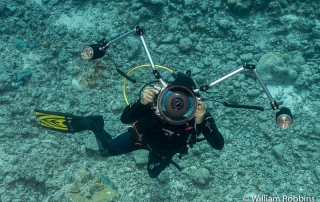
Back at the lodge, Jürgen demonstrated focus-stacking in table-top macro photography and this was a good opportunity to see what equipment is available to the specialist photographer. Inevitably much of this gear comes from the US where there is a much greater variety of models and prices. Soft boxes on flashguns, use of wireless remote triggering of several flash units, rails to advance the camera by millimetres for focus stacking were all demonstrated. Tutorials on Lightroom and on the handling of a variety of subject matter were interspersed with trips to the localities which Jürgen & Stella had checked out during the preceding month.
This was the first Masterclass run by JCU so we were guinea pigs, and we were invited to provide feedback with an evaluation of the course. Doubtless some changes will be made for the next class taking place in September. The standard of instruction and the obvious enjoyment of our leaders with their very real interest in each one of us, coupled with a location I hadn’t visited since becoming more serious about photography, resulted in this being far and away the best course I’ve done. I felt I’d been taken to a whole new level of creativity. At the conclusion of the course we were presented with a Certificate of Completion and an invitation to keep in touch.
Carol Hall’s Images
News Update:
The next JCU Nature Photography Masterclass is from 19 – 26 September 2012. Click eBrochure below for more details.
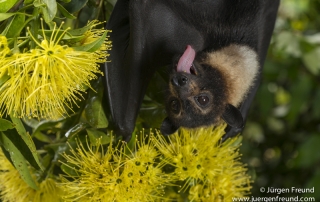
Tolga Bat Hospital Story in GEOlino Magazine
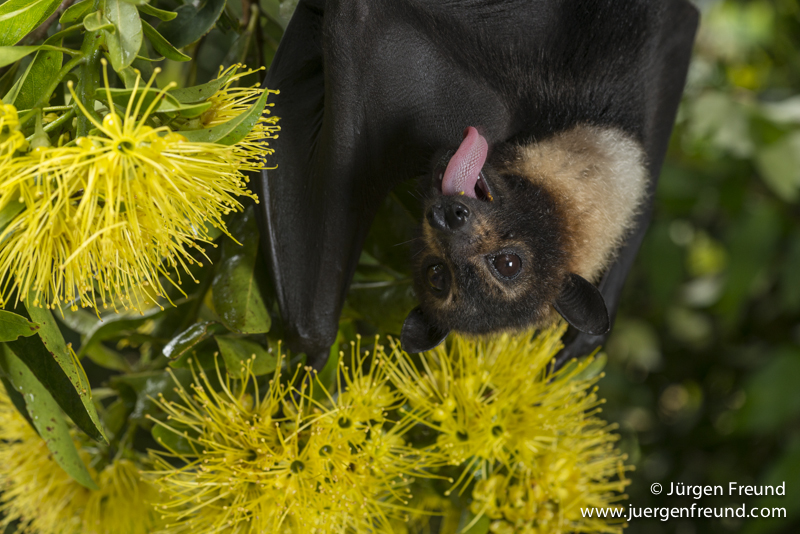
In the past five years, we have had two super strong category 5 cyclones visit our part of the world in Far North Queensland, Australia – Cyclone Larry in March 2006 and Cyclone Yasi in February 2011. The incredibly strong winds stripped our dense forest foliage naked and as a result, full sunshine caused wild tobacco to grow from the forest floor. Fruit bats normally found foraging in tree canopies were on the ground feasting on tobacco leaves. Here lived paralytic ticks which attacked a huge population of fruit bats causing deaths in the humungous thousands leaving behind 400 orphan babies and 800 adults in the care of the Tolga Bat Hospital. We first visited Tolga Bat Hospital in Atherton sometime January 2007 and photographed the busy volunteers and the tireless Jenny Maclean work non-stop. We didn’t do anything with our photo story as other projects and an expedition to Asia/Pacific took over our lives for a few years. We re-visited Jenny after Cyclone Yasi and finally, we have the Tolga Bat Hospital story in the German children’s magazine GEOlino issued last month, July 2012.
First JCU Masterclass in Nature Photography
29 June – 6 July 2012
Alas the dust has settled and the photo bags, tripods and cables are stored safely back into their normal place at home – the first masterclass is accomplished. And what a fun hard working 8 days it was. JCU Masterclass in Nature Photography is a success!
But for two months before D-day, Yogi manically prepared to be a teacher. Day after day, he fussed, fretted and worked hard at making his lectures interesting, relevant and as much targeted learning as possible – from the very basic to the extremely high level of difficulty. As a result – thirteen happy participants who didn’t want the course to end. “Two more weeks?” Philip asked.
The second Masterclass is from September 19 – 26. Book now before it’s too late!
Masterclass in Nature Photography by Jürgen Freund at JCU
Cairns-based photographer Jürgen Freund has been pointing his camera at all creatures great and small for several decades now, and with great success.
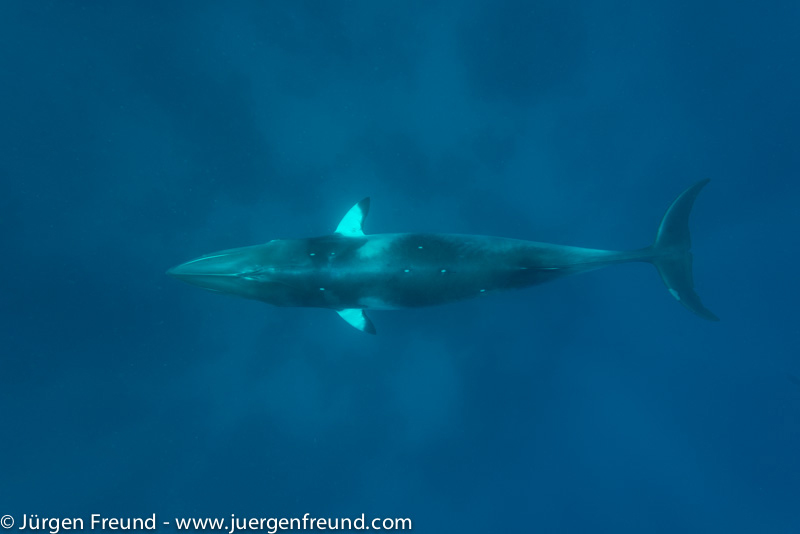
He won the 2010 PATA Gold Award for Travel Photography with an image of marine biologist Brad Norman tagging a whale shark at Ningaloo Reef. A spectacular picture of a Minke whale’s eye won the Oceans category of the Nature’s Best Magazine international competition. He has also placed highly in competitions including the World Press Photo Award and UK’s Wildlife Photographer of the Year.
Yogi, as he is widely known, works with his wife Stella Chiu-Freund. They have published some stunning books that aim to focus attention on valuable and fragile places.
The Coral Triangle is the result of an 18-month expedition undertaken for WWF, documenting the wildlife, land and seascapes of a six million-square kilometer expanse of land and sea encompassing the waters of Indonesia, Malaysia, the Philippines, Papua New Guinea, Solomon Islands and Timor-Leste.
For Sulu-Sulawesi Seas they documented some of the millions of species, from marine mammal behemoths to minute micro-organisms, that live in the eco-region encompassing the waters and islands of Philippines, Malaysia and Indonesia.
Closer to home in Cairns, Yogi and Stella are inspired by the rainforests of the Wet Tropics World Heritage Area and the neighbouring woodlands and savannah.
In June 2012 they will have returned from another Asian expedition to teach a masterclass in nature photography for James Cook University in Queensland’s far north.
The majority of the week’s classes will be held in the field, visiting the lush forests, crater lakes and extinct volcanoes of the Atherton Tablelands. Yogi will help you capture your best shots of the region’s inspiring flora, fauna, landscapes and waterways.


Follow Us!